
Are Solar Panels Worth It in New York? (2026 Guide)
Share:
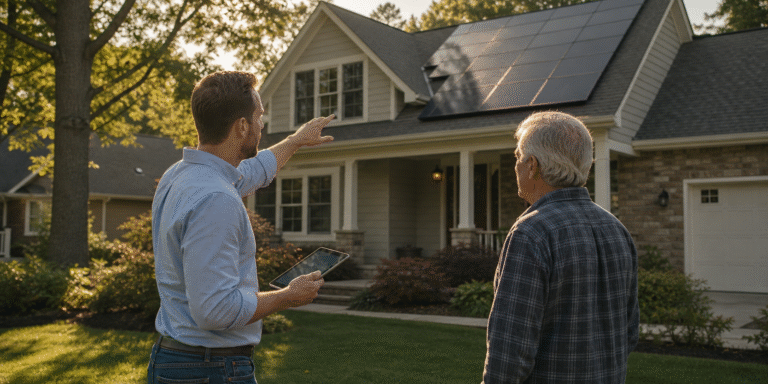
New York homeowners pay above-average electricity rates — and those rates have climbed steadily for years with little sign of reversing. Solar panels are a direct response to that problem: generate your own power and reduce how much expensive grid electricity you actually buy.
Whether the investment makes sense depends on your home, your energy usage, and how you finance the system. This guide covers the real numbers: what systems cost, what you save, how long payback takes, and which incentives are available to Upstate NY homeowners in 2026.
Key Takeaways
- Net metering is intact. New York credits excess solar energy at the full retail rate, and credits roll over month to month and year to year.
- The state credit remains. New York’s 25% tax credit (up to $5,000) is still available for new installations in 2026.
- Incentives come off your bill upfront. NY-Sun delivers its incentive through your contractor as a direct discount — no rebate to chase.
- Ownership matters at resale. Owned systems add meaningful value to your home. Leased systems do not.
The Basic Math: Cost, Savings, and Payback
What systems cost
For a typical Upstate NY home, a 10 kW system — the most popular size — starts around $25,000 before incentives. A smaller 6 kW system starts around $15,000; a larger 15 kW system starts around $37,500.
Every system is custom-quoted based on your roof type, energy usage, and equipment. The figures above are starting points, not fixed prices.
What you save
A 10 kW system typically saves $2,000–$3,000 per year on electricity. According to EnergySage marketplace data, the average New York homeowner saves around $60,500 over 25 years. New York’s above-average rates work in your favor here — the more expensive grid power is, the more valuable every kWh your panels produce.
Payback period
Payback timelines vary based on your system size, electricity usage, roof, and financing method — and they’ve shifted since the federal credit expired at the end of 2025. A custom quote is the most accurate way to model your specific return. A solar system carries a 25-year warranty, so the years after payback represent ongoing savings with no additional cost.
New York Solar Incentives in 2026
The incentive picture changed at the end of 2025. Here’s where things stand for new installations.
25% New York State Tax Credit
Also known as the Solar Energy System Equipment Credit, this is the headline incentive for New York homeowners in 2026. The state offers a personal income tax credit equal to 25% of your total system cost, up to a maximum of $5,000.
Unlike a deduction, a tax credit reduces your tax bill dollar-for-dollar. On an $18,000 system, that’s up to $4,500 back.
To claim it, the panels must be installed at your primary residence. Eligibility depends on your individual tax situation — a qualified tax professional can confirm the specifics.
NY-Sun / NYSERDA Incentive
NY-Sun is the state’s primary solar incentive program, administered by NYSERDA. Here’s how it works in practice:
- Your contractor receives the incentive and passes it directly to you as a discount off your installation price.
- You never pay full price upfront or wait for a rebate check.
- The exact amount depends on your project size, location, and the current program phase.
- You must work with a NYSERDA-approved contractor to access it.
Incentives are designed to phase down as solar adoption grows, so current amounts may differ from prior years. Ask your contractor what’s available for your specific project.
New York Property Tax Exemption
Installing solar can increase your home’s assessed value — which would normally mean a higher property tax bill. New York lets you exempt that added value from your property assessment for up to 15 years. To claim it, file Form RP-487 with your local property assessor after installation. Note that some local governments have opted out — confirm with your assessor before assuming it applies.
New York Sales Tax Exemption
Solar equipment is 100% exempt from New York State sales and use tax, applied directly by your installer at the point of sale. Some municipalities offer a local exemption too — your installer can confirm.
What happened to the federal tax credit?
The 30% federal Investment Tax Credit expired for customer-owned systems installed after December 31, 2025. New installations in 2026 are not eligible. Third-party owned systems (leases and PPAs) continue to qualify for a commercial credit, which may be passed through as lower monthly rates.
How New York’s Net Metering Works
Net metering is one of the most important factors in the financial case for solar — and New York has a homeowner-friendly policy.
Here’s how it works: when your solar system produces more energy than your home needs, the excess is sent to the grid and your utility credits you at the full retail rate. Those credits roll over from month to month and year to year, so a surplus built up over sunny summer months can offset bills in winter when your system produces less.
A few specifics to know:
- Credits are applied in kWh, not dollars.
- New solar customers participate in net metering for a 20-year term.
- Homeowners who install after January 1, 2022 pay a monthly Customer Benefit Contribution (CBC) charge of $0.97 to $1.67 per kW depending on the utility.
- New York is transitioning to a program called VDER (Value of Distributed Energy Resources). Homeowners can opt in, but net metering will generally save more money for most homeowners.
Major Upstate NY utilities including National Grid and NYSEG participate in net metering.
Cash, Loan, or Lease: How You Pay Shapes Your ROI
The financing method changes the math significantly.
- Cash purchase: Highest upfront cost, fastest payback. You own the system, claim all applicable tax credits, and keep 100% of the savings.
- Solar loan: Lower barrier to entry, similar to a home improvement loan. Monthly payments are often offset substantially by monthly bill savings. You still own the system and can claim tax credits. The payback period is longer than cash, but the system is yours.
- Lease / PPA: No upfront cost. You pay a monthly rate for the electricity the system produces. Immediate bill savings, but no tax credit eligibility, no property value benefit, and no equity in the system.
For homeowners focused on long-term return, ownership — cash or loan — typically delivers better lifetime value than leasing. The right choice depends on your financial situation and goals.
Does Solar Add to Your Home’s Value?
Research consistently shows that solar installations increase home resale value — and recent data suggests the premium is larger than previously understood. A study presented by EnergySage, analyzing 5,000 home sales between 2020 and 2023, found homes with owned solar panels sold for 5–10% more than comparable homes without solar. Newer systems (under 5 years) commanded a 7–9% premium; older systems still delivered 5–6%.
One important note: the premium applies to owned systems only. Leased systems and PPAs showed no property value increase in the research.
New York’s property tax exemption means that added value won’t trigger a higher tax bill — though confirm with your local assessor, as some municipalities have opted out.
What Affects Whether Solar Is Worth It for Your Specific Home
The numbers above reflect typical installations — your actual return depends on a few key factors.
Roof condition and orientation. South-facing roofs with minimal shading produce the most. East- and west-facing roofs still perform well. A roof that will need replacing in the next five years should generally be addressed before installing solar.
Your current electricity usage. Homes using 1,500+ kWh per month see stronger returns. If you’re planning to add an EV or upgrade your HVAC, factoring that into system sizing upfront improves the economics.
Shading. Trees, neighboring structures, and roof features all affect output. A site survey will identify shading issues and factor them into production estimates.
Financing method. Cash purchases yield the fastest payback and highest total return. Loans extend the payback timeline but preserve liquidity. Leases offer $0 down with immediate savings, though the long-term return is different from ownership — and leased systems don’t carry the same resale value premium.
Frequently Asked Questions
Are solar panels worth it in Upstate New York specifically?
For most homeowners, yes. High electricity rates, full retail net metering, and meaningful state incentives create favorable conditions. A site-specific quote gives you the most accurate picture for your home.
Are solar panels tax deductible?
What’s available for solar is better than a deduction — it’s a tax credit, which reduces your bill dollar-for-dollar. New York’s 25% state credit (up to $5,000) applies to new 2026 installations. The 30% federal credit expired after December 31, 2025. A tax professional can confirm your eligibility.
How long does it take for solar panels to pay for themselves in New York?
It depends on your system size, electricity usage, roof, and how you finance. A custom quote is the most reliable way to model your specific return. With a 25-year warranty, the years after payback are pure savings.
What happens to unused solar credits in New York?
Credits roll over month to month and year to year under New York’s net metering program. New customers participate for a 20-year term and pay a monthly CBC charge of $0.97–$1.67 per kW depending on the utility.
Do I need a specific contractor to access NY incentives?
Yes — NY-Sun incentives require a NYSERDA-approved contractor. Look for the “Quality Solar Installer” (QSI) designation for an additional layer of vetting.
Find Out What Solar Is Worth for Your Specific Home
The ranges in this guide reflect typical Upstate NY installations — your actual savings and payback period depend on your home’s energy usage, roof characteristics, and the specifics of your system design.
New York Electric & Solar serves the Upstate NY market with NYSERDA-approved installation and no-pressure consultations. Our team will walk you through system sizing, available incentives, and projected savings based on your actual property — so you have a clear picture before making any decisions.
Get your custom quote in minutes and start saving on solar.
Related Articles
More insights about Solar Incentives

How Can Solar Incentives by State Benefit Florida Homeowners

10 Essential Solar Incentives Every Florida Homeowner Should Know

5 Essential Solar Incentives by State for Savvy Homeowners
Ready to Go Solar?
Have questions about solar energy? Our experts are here to help you make the switch to clean, renewable energy.