
What Are the Benefits of Installing EV Chargers at Home?
Share:
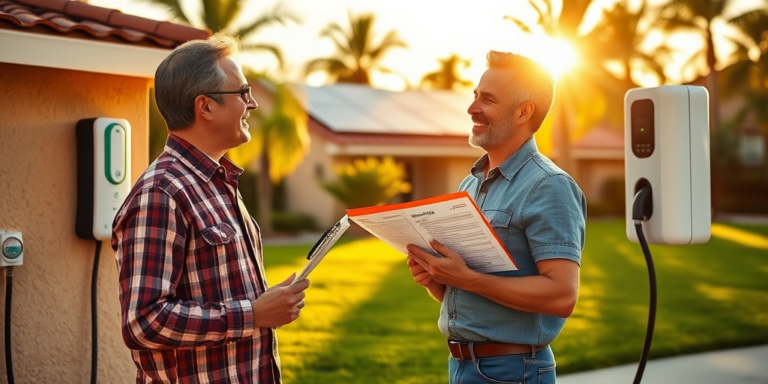
Imagine pulling into your driveway after a long day, greeted not just by the familiar comforts of your home, but also by a quiet companion waiting to recharge—your electric vehicle (EV). With the rise in EV popularity across Florida, the ability to conveniently charge your car at home is no longer just a perk; it’s becoming a necessity. By 2025, the number of EVs on U.S. roads is projected to surpass 26 million (EVAdoption.com), reflecting a significant shift towards greener transport solutions. As homeowners explore how to make their homes more energy efficient and sustainable, one crucial question emerges: What Are the Benefits of Installing EV Chargers at Home? A thoughtful investment here not only enhances your convenience and comfort but also supports your green energy goals, paving the way for a cleaner environment and potentially lowering electric bills.
In 2025, installing an EV charger at home stands out amid rising energy costs, new solar incentives, and the urgent need for sustainable practices. Having the ability to charge at home positions you ahead of potential grid instability and energy fluctuations. Did you know that homes equipped with EV chargers can experience increased property values and appeal? A survey indicates that nearly 75% of potential homebuyers would favor a property with EV charging capabilities (Zillow.com). With the convergence of these factors, understanding the multifaceted benefits of at-home EV chargers has never been more urgent.
In this comprehensive guide, we will delve into the myriad advantages of installing EV chargers at home by exploring five key sections:
- Case Study: The Journey of a Florida Homeowner Transforming Their Home
- Essential Checklist: Steps to Install Your EV Charger
- Myth-Busters: Debunking Common Misconceptions About EV Charging
- Local Focus: The Impact of EV Chargers in Florida
- Technical Deep-Dive: Understanding the Mechanics Behind EV Charging
Let’s start this enlightening journey by examining the real-life impact of installing an EV charger through a compelling case study.
How One Florida Homeowner Maximized Their Convenience with a Home EV Charger
Meet Jennifer, a dedicated Miami-based professional and proud owner of a sleek electric SUV. For years, Jennifer had been driving her car to work and using public charging stations sporadically. It was convenient, but the hassle of finding available chargers and planning around charging times added stress to her already busy schedule.
In early 2023, after much research and consideration, she decided to install an EV charger at home. By opting for a Level 2 charger, Jennifer’s decision transformed her daily routine. She could now jump into her car every morning fully charged, eliminating the uncertainty around the availability of charging stations. Interestingly, her neighbor Tom, who also drives an EV but doesn’t have a home charger, often found himself anxious about charging, especially before long road trips. This contrast became painfully clear when Tom had to rush to a public charging station one evening due to a low battery warning, only to find a long line ahead of him. Poor Tom missed out on family plans while Jennifer enjoyed uninterrupted quality time with hers.
But the benefits didn’t stop at convenience for Jennifer. Her purchase of the home EV charger provided an unexpected financial boon. According to a study by the U.S. Department of Energy, residential charging can reduce the cost per mile of electric driving compared to public stations (DOE.gov). Additionally, Florida homeowners might qualify for tax credits and rebates for installing charging equipment, especially as the state pushes for increased EV infrastructure (EIA.gov). These financial incentives significantly offset her installation costs, making it a wise investment.
Looking ahead, projections indicate that home charging capabilities enhance overall property value. According to Redfin, homes with EV charging stations tend to sell for higher prices compared to those without (Redfin.com). Given Florida’s real estate market, where property values are rising dramatically, Jennifer felt reassured knowing her investment would likely pay off in the long run.
Essential Checklist: Steps to Install Your EV Charger
Thinking about joining Jennifer and reaping the benefits of home charging? Here’s your essential checklist, simplifying your pathway to installation.
- Step 1: Evaluate Your Electrical System
Begin by assessing whether your home’s electrical system can handle an EV charger. Many homes require an electrical service upgrade, particularly if you choose a Level 2 charger. Consultation with a licensed electrician will clarify these needs.
- Step 2: Choose the Right Charger
Select between Level 1 and Level 2 chargers. While Level 1 chargers plug into standard outlets and provide slower charging, Level 2 chargers are significantly faster and well-suited for daily use, making them ideal for home installations.
- Step 3: Find a Suitable Location
Identifying a convenient and safe location for your charger is essential. Most homeowners prefer having the charger near their parking area, ensuring effortless access.
- Step 4: Hire a Professional
Proper installation requires specialized knowledge. Hiring a qualified electrician will ensure safety and compliance with local regulations.
- Step 5: Claim Available Incentives
Before installation, research potential tax credits, installations, and rebate programs offered in Florida. These may help recoup some of your initial costs while supporting your green energy goals.
By following these steps, you’re not just investing in a convenience; you’re actively contributing to a sustainable future. According to a report by the Florida Electric Power Coordinating Group, the state’s adoption of EV charging infrastructure is expected to enhance job creation and economic growth (FEA.com). It’s high time to take action!
Myth-Busters: Debunking Common Misconceptions About EV Charging
Beneath the surface of EV charging lies a myriad of myths that can cloud judgment. Let’s take the opportunity to debunk five of these widespread misconceptions:
- Myth #1: Charging at Home is Too Expensive
While there’s an initial investment, home charging is considerably cheaper in the long run. Electric rates for home charging typically cost a fraction of the price of public charging stations (Energy.gov).
- Myth #2: EV Chargers are Difficult to Use
In reality, most EV chargers are user-friendly. They plug in easily, and many come with smart technology, allowing for remote control and monitoring through your smartphone.
- Myth #3: Home EV Charging takes Forever
Many assume home charging is slow. However, Level 2 chargers provide substantial recharge in just a few hours, often overnight, compared to the lengthy wait at public chargers.
- Myth #4: You Need a New Electric Panel for Charging
While upgrading your electric panel might be necessary in some cases, many homes can accommodate chargers without extensive upgrades. A consultation with an electrician will clarify your specific situation.
- Myth #5: All EVs Can Use Any Charger
Not all EVs are compatible with every charger type. It’s essential to ensure that your chosen charger matches your vehicle’s specifications.
Debunking these myths empowers homeowners to embrace the technology with confidence. As EV adoption continues to surge, recognizing the true nature of home EV charging can lead to better decisions and smoother experiences.
The Impact of EV Chargers in Florida: Local Focus
As Florida homeowners continue to prioritize energy efficiency and sustainability, understanding the local landscape surrounding EV chargers is crucial. Here are a few points illustrating the significance of home EV chargers in the Sunshine State:
- Increasing Demand for EV Infrastructure: Florida aims to expand its EV charging network significantly by 2025, establishing an estimated 1,000 new charging stations statewide (FDOT.gov).
- Supportive Incentives: Florida offers various incentives for EV adoption, including rebates and tax credits for home charging installations. The state’s efforts contribute to holistic growth and sustainability (FloridaEV.org).
- Environmental Impact: Reducing greenhouse gas emissions through the installment of more EVs and charging capabilities directly supports Florida’s goals of environmental protection. A shift to EVs aligns with the state’s commitment to limiting climate change impacts.
Understanding the local environment and policies will empower homeowners to take advantage of timely opportunities, ensuring that they make informed decisions for both financial and environmental impacts.
Understanding the Mechanics Behind EV Charging: Technical Deep-Dive
Finally, it’s essential to grasp the technology behind EV charging. An understanding of how charging works can enhance your experience and optimize your usage.
Charging systems typically involve three levels:
- Level 1 Charging: Utilizes a standard household outlet (120V) but is slow, providing roughly 4-5 miles of range per hour of charging.
- Level 2 Charging: Requires a dedicated charging station and significantly lowers charge times compared to Level 1, allowing for 10-60 miles of range per hour, suitable for most home installations.
- DC Fast Charging: Ideal for public stations, it’s the fastest method but not typically available for home use. It can recharge an EV to 80% in approximately 30 minutes.
For those committed to sustainability, understanding the intricacies of energy consumption can lead to optimizing usage. Moreover, integrating solar energy solutions with your home EV charger can drastically reduce costs. Homeowners can sell back excess energy produced during peak sunlight hours, thereby creating a symbiotic relationship between solar energy and EV charging.
In conclusion, homeowners in Florida stand at the forefront of a revolution, fueled by the intersection of electric vehicles and renewable energy solutions. Solar energy combined with home EV charging can enhance convenience while shaping a sustainable future.
Next Steps for Florida Solar Buyers in 2025
Ready to embrace the electric future? Here’s your action plan to install an EV charger at home:
- Step 1: Audit Your Electric Bill
Determine your current electricity rates and usage patterns to understand potential cost savings.
- Step 2: Research Available Systems
Investigate different charger types and brands to find the right fit for your needs.
- Step 3: Contact Your Utility Provider
Learn about potential rebates or incentives available through your energy provider for installing an EV charger or solar systems.
- Step 4: Schedule a Consultation
Contact a licensed electrician to evaluate your home and discuss installation options.
- Step 5: Stay Informed
Regularly check for updates on state incentives and solar advancements to maximize your investment.
By following these actionable steps, you empower yourself to make educated decisions for your home’s energy future. Created to seamlessly blend into your lifestyle, EV chargers are key components of a sustainable infrastructure.
As we wrap up our exploration of the benefits of installing EV chargers at home, remember this: every step taken towards harnessing renewable energy, including the addition of an EV charger, paves the way for a brighter, more sustainable future. Ready to start your solar journey in 2025? Connect with a certified expert at nyelectricandsolar.com today.
Related Articles
More insights about EV Charger

What Florida Homeowners Ask About Solar EV Charger Installation

Florida Homeowners Exploring EV Charger Installation Benefits

Beginner’s Guide to Understanding EV Charger Installation for Homeowners
Ready to Go Solar?
Have questions about solar energy? Our experts are here to help you make the switch to clean, renewable energy.