
Do Solar Panels Work on a Metal Roof? What New York Homeowners Should Know
Share:
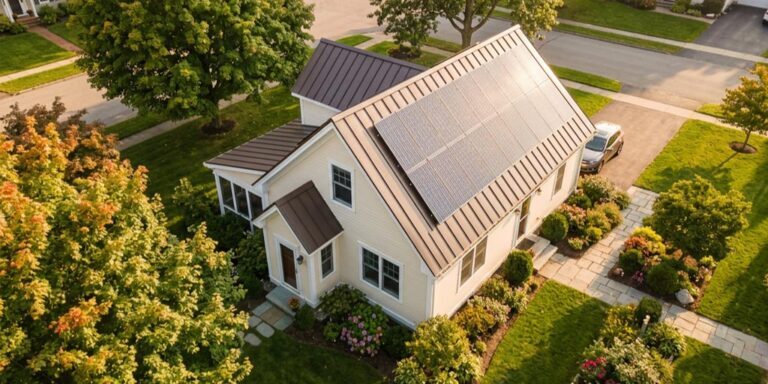
Metal roofs are a common sight across Upstate New York. They handle snow, ice, and decades of harsh winters better than almost any other roofing material. But when homeowners start looking into solar, one question comes up quickly: Can you actually put panels on a metal roof?
The short answer is yes, and in many cases a metal roof is one of the better surfaces for installing solar on a metal roof. The longer answer depends on whether you have standing seam or corrugated metal roofing, how the mounting hardware is selected, and how an installer accounts for snow load in your region. Here is what Upstate NY homeowners need to know before scheduling a consultation.
Key Takeaways
- Lifespan alignment works in your favor — metal roofs last 40–70 years, which means a 25-year solar system is unlikely to outlive the roof underneath it.
- No-drill mounting protects standing seam roofs — seam-grip clamps attach to the raised rib without penetrating the roof surface.
- Corrugated roofs require through-fasteners, not clamps — installation is still routine, but the hardware and process differ.
- Snow load is engineered into every Upstate NY system — tilt angle, rail spacing, and structural capacity are all part of the site design.
- Incentives are the same regardless of roof type — the NY state solar tax credit, NY-Sun, and net metering all apply to metal roof installations.
Why Metal Roofs Are a Strong Candidate for Solar
You may expect to hear a catch when asking about solar on a metal roof. There usually isn’t one. Three characteristics make metal roofing particularly well-suited to solar.
- Lifespan alignment. Metal roofs last 40 to 70 years. Most solar systems carry a 25-year performance warranty. That means you are unlikely to face a reroof during your panel warranty period which is one of the most common concerns homeowners raise when evaluating rooftop solar.
- Structural stability. Metal roofing is rigid and dimensionally consistent, which gives mounting hardware a reliable platform. Many profiles are factory-finished with a baked-on coating that holds up well against the brackets and clamps used in solar installations without corroding at attachment points.
- Pitch advantage in cold climates. Metal roofs in Upstate NY are typically installed at a steeper slope to shed snow and ice. That same pitch helps solar panels self-clear after a snowfall and improves winter production angles — a meaningful benefit given the region averages around 4.2 peak sun hours per day.
Standing Seam vs. Corrugated: How the Installation Differs
The installation approach depends almost entirely on which metal roof profile you have. The two most common types in Upstate NY are standing seam and corrugated, and they require different hardware and fastening methods.
| Standing Seam | Corrugated | |
| Profile | Raised vertical ribs between panels | Wavy profile, no raised seams |
| Mounting method | Seam-grip clamps (no drilling) | Through-fasteners at wave peaks |
| Roof penetrations | None | Yes, sealed with compression boots |
| Roof warranty impact | Minimal — no penetrations | Low when installed correctly |
| Common in Upstate NY | Residential, commercial, agricultural | Barns, older homes, utility buildings |
| Installation complexity | Straightforward | Requires more planning |
Standing Seam Metal Roofs
Standing seam is arguably the most solar-friendly roof type available. The raised ribs that run vertically along each panel are exactly what standing seam solar mounts New York installers use to attach racking.
- How it mounts: S-5 clamps and similar seam-grip hardware slide over the raised rib and tighten mechanically. There’s no drilling through the roof surface required.
- Why that matters: No penetrations means no new leak points and no disruption to the roof warranty. The clamp sits on the seam, the mounting rail attaches to the clamp, and the installation proceeds the same as any other rail-based racking system.
- Why it’s common here: Standing seam is popular on residential, commercial, and agricultural buildings across Upstate NY. Large roof areas can be fitted quickly without extensive flashing or sealant work, which keeps installation time and cost efficient.
Corrugated Metal Roofs
Corrugated roofing has a wavy profile with no raised seam to clamp onto, so the installation approach is different but no less reliable when done correctly.
- How it mounts: Installers use through-fastened hardware: stainless steel lag bolts that go through the roof surface at the high points of the corrugation, where water is least likely to pool.
- How leak risk is managed: Metal roof solar clips designed for corrugated profiles include a built-in compression seal sized to the specific corrugation pitch. Flashing boots and sealant choices are specified by the manufacturer and matched to the roof coating. When installed correctly, the system carries no greater leak risk than the original roofing fasteners.
- What to expect from the process: Corrugated installations require slightly more planning than standing seam, but they are routine work for experienced solar contractors and should not add significant time to a project.
Snow Load Considerations for Solar on Metal Roof in Upstate New York
Upstate New York receives some of the heaviest snowfall in the continental United States, particularly in the lake-effect belts around Syracuse, Buffalo, and the Tug Hill Plateau. Solar on metal roof Upstate New York installations have to account for structural loading that installers in Florida or Arizona never consider.
A properly engineered system addresses snow load through several design decisions:
- Panel tilt angle — steeper angles (typically 30–40 degrees in Upstate NY) let snow slide off more readily and improve winter production.
- Rail spacing and fastener density — the racking layout distributes snow weight across the roof structure rather than concentrating it at attachment points.
- Structural engineering review — the site survey confirms that roof framing can carry both panel weight and the ground snow load for your specific county.
- Panel row gaps — spacing between rows allows accumulated snow to move off the array rather than loading up against a solid surface.
A NYSERDA-approved installer will pull the applicable snow load data for your location as part of system design. This is a standard step in the engineering process, not an optional add-on.
What the Solar Installation Process Looks Like
Installing solar on a metal roof follows the same six-step process as any residential solar installation: consultation, site survey, custom design, permitting, installation, and activation. The metal-specific work happens primarily during the site survey and design phases.
Site Survey and Design
During the site survey, the installer will:
- Identify your roof profile and measure seam spacing or corrugation pitch
- Confirm the structural framing underneath
- Assess shading across the array area
- Specify the exact clamp or clip type, rail layout, and fastener pattern
Permitting
Permitting is handled by the contractor and includes the building permit, utility interconnection application, and in some cases structural calculations stamped by a licensed engineer. Working with a NYSERDA-approved contractor ensures the application follows state incentive program requirements.
Installation
Installation itself typically takes one to three days. Metal roof installations can move faster than shingle installations because standing seam hardware attaches cleanly to the seam without the flashing and caulking work shingle roofs require at each penetration.
NY Incentives That Apply to Metal Roof Installations
The incentives available for solar do not change based on your roof type. Whether you have standing seam or corrugated metal roofing, every major NY incentive applies.
- NY State Solar Energy System Equipment Credit. New York homeowners who own their systems can claim a state tax credit worth 25% of system cost, up to $5,000. Unused credit can be carried forward for up to five years. [SOURCE FLAG: NY Department of Taxation and Finance — confirm current program year eligibility before publish]
- NY-Sun / NYSERDA incentives. NY-Sun incentives are available on metal roof installations when the contractor is NYSERDA-approved. Working with an approved installer is a requirement to access certain state programs.
- Full retail net metering. New York has full retail net metering. Excess energy your system sends to the grid is credited at the retail rate, and credits roll from billing period to billing period. New solar customers participate in the net metering program for a 20-year term. A monthly Customer Benefit Contribution charge applies, ranging from $0.97 to $1.67 per kW installed depending on your utility.
Reading tip: New York Solar Tax Credits Explained: How to Stack Federal and State Incentives
Common Questions About Metal Roof Solar
Can solar panels damage my roof?
When installed correctly, solar panels should not damage a metal roof. On standing seam roofs, non-penetrating clamps attach to the seam profile without drilling. On corrugated roofs, through-fasteners are installed at the high points with manufacturer-specified sealants. Roof damage is typically the result of improper installation, not the panels themselves, which is why a site survey that includes a structural and condition assessment matters.
Do solar panels need a permit in New York?
Yes. Residential solar installations in New York require a building permit from the local municipality and a utility interconnection application. NYSERDA-approved contractors handle the permitting process as part of the installation. Skipping permits is not an option and can create problems with homeowners insurance, net metering enrollment, and future property sales.
Will snow slide off my solar panels and damage my gutters?
It can if the system is not designed with this in mind. Snow guards or panel edge stops are sometimes added to prevent large sheets from sliding off the array at once. Your installer should assess the relationship between panel tilt, roof pitch, and gutter or walkway positions below the array. This is standard design review for installations in high-snowfall zones like Upstate NY.
How long does a metal roof solar installation take?
Most residential installations take one to three days once permitting is complete. The permitting phase typically runs two to four weeks. From initial consultation to activation, the full process is usually six to eight weeks. Metal roof installations can move slightly faster than shingle installations because standing seam hardware attaches cleanly without extensive flashing work.
Does my metal roof type affect which installer I should use?
It affects what questions you should ask. Not all solar installers have equal experience with standing seam versus corrugated profiles. Ask how many metal roof projects the contractor has completed in the region and whether they use manufacturer-certified clamp hardware for your specific seam profile. A NYSERDA-approved contractor with metal roof experience is the right combination for solar on metal roof Upstate New York installations.
Get a Free Consultation for Your Metal Roof
Metal roofs are among the most durable and solar-compatible roof types available. If your home has standing seam or corrugated metal roofing, you are likely in a good position to move forward with a residential solar installation in Upstate NY.
New York Electric & Solar is a NYSERDA-approved installer serving the Upstate NY market. Schedule a free consultation to get a custom system design, snow load review, and savings estimate for your specific roof and energy profile.
Related Articles
More insights about Solar Installation

How Much Does It Cost to Install Solar Panels in New York?

How Many Solar Panels Do You Need in Upstate New York?

Myth: Solar Panels Don’t Increase Home Value in Florida
Ready to Go Solar?
Have questions about solar energy? Our experts are here to help you make the switch to clean, renewable energy.