
What Florida Homeowners Are Asking About EV Charger Installation
Share:
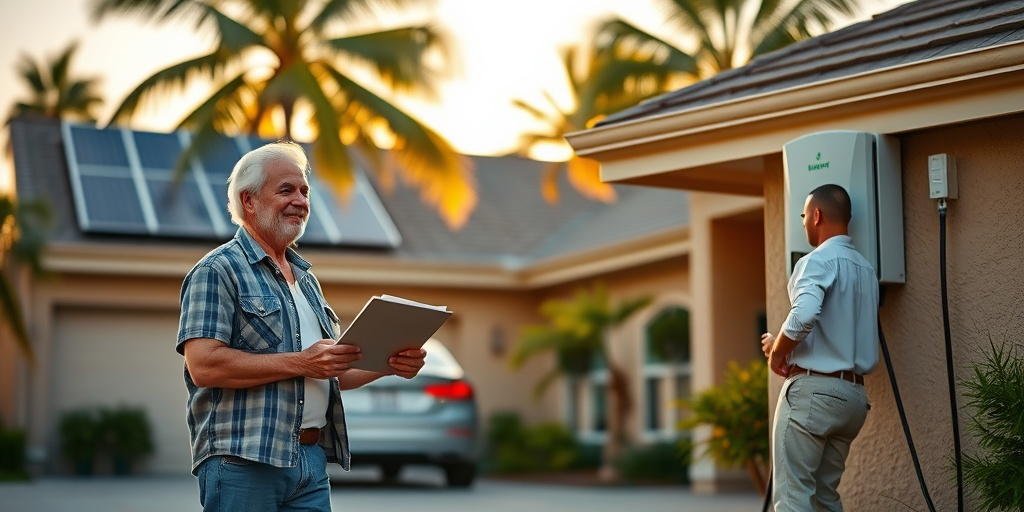
Have you ever considered the future of transportation powered entirely by renewable energy? A recent study revealed that electric vehicle (EV) sales soared by 50% from 2021 to 2022, indicating that Florida homeowners are not only embracing this trend but also considering how to integrate it into their daily lives. In fact, Florida is predicted to have over 20% of all vehicle sales as electric by 2025 (National Renewable Energy Laboratory). With the global push for greener technology and more sustainable solutions, it’s clear that transitioning to electric vehicles is not just a trend but an essential movement towards environmental sustainability.
This brings us to our topic today: What Florida Homeowners Are Asking About EV Charger Installation. As more homeowners in Florida explore the potential of solar energy and electric vehicles, the question of how to install EV chargers becomes paramount. EV charger installations affect property value, energy costs, and the overall electricity grid. In 2025, with incentives potentially increasing for families to switch to solar-powered homes, this inquiry becomes even more urgent. Given the rising energy costs and new solar incentives available, it is crucial to plant the seeds of knowledge now.
In this article, we will explore five vital sections where we’ll answer common questions about EV charger installations and empower Florida homeowners making this important decision:
- Case Study: A look into a real family’s journey with EV charger installation.
- Checklist: Step-by-step guidance for installing your EV charger seamlessly.
- Myth-Buster: Common misconceptions about EV chargers addressed with data.
- Local Focus: Specific considerations for Florida homeowners regarding solar and EV chargers.
- Technical Deep-Dive: An in-depth look at the mechanics involved in EV charger installation.
Join us as we embark on this enlightening journey together!
Understanding EV Charger Installation: A Family’s Story
Let’s dive into a compelling case study that highlights the real-life experiences of a Florida family—meet the Garcias. They were an ordinary family residing in Orlando, contemplating the purchase of an electric vehicle while considering the impact on their lifestyle and home. The Garcias were motivated not just by the prospect of saving on gas but also by the commitment to environmental sustainability. After a year of research, they finally took the leap to purchase an electric vehicle, but there was one challenge—they needed an EV charger installed in their garage.
Initially unsure about the process, the Garcias did extensive research and found that installing an EV charger would not only facilitate the convenience of charging their vehicle at home but could also increase their property value. According to a survey conducted by the Electric Power Research Institute, homes equipped with EV chargers can see property values increase by an average of 4% (EPRI). The Garcias decided to move forward, understanding that this investment aligned perfectly with their long-term goals.
To simplify the process, they kept a checklist that helped them navigate through the myriad of options available. Here’s their actionable checklist:
- Step 1: Evaluate your home’s electrical infrastructure to ensure it can support the additional load from an EV charger.
- Step 2: Research local incentives and rebates available for EV charger installation, particularly in Florida.
- Step 3: Choose between Level 1 and Level 2 chargers, knowing that Level 2 chargers charge faster and are more suited for home use.
- Step 4: Consult with licensed electricians experienced in EV installations.
- Step 5: Apply for necessary permits before installation—this varies by locality in Florida.
Through their journey, the Garcias learned that a survey indicated the installation of EV chargers could contribute to energy reductions by about 40% if paired with a solar solution (Energy.gov). Their awareness of maximizing solar energy output reinforced the motivation behind choosing to install both a solar panel system and an EV charger. They concluded that with the growing trend towards electric vehicles, they couldn’t afford to miss out on the benefits.
One significant misconception is the idea that EV chargers are unnecessary if you have access to public charging stations. While public chargers are an option, they do not offer the convenience of charging at home, potentially leading to inconsistent power access (SEIA.org). The Garcias flourished by choosing to install a home charger, significantly improving their day-to-day convenience while enhancing their property value.
As we can see from the Garcia family’s experience, the installation of an EV charger can seem daunting but is ultimately rewarding. The decisions they made positively impacted their investment strategy and aligned with the sustainable future they envisioned for themselves and their community. With this in mind, the next step is to create a solid checklist for others like the Garcias wishing to install an EV charger at their home.
Your Step-By-Step Guide to Installing an EV Charger
When you are ready to step into the world of electric vehicle ownership, it’s imperative to understand the steps involved in installing an EV charger. Each step is designed to empower you to create a seamless installation process. Here’s your go-to checklist for successfully installing an EV charger:
- Step 1: Assess Your Energy Needs
Start by assessing your electric vehicle’s charging requirements. Depending on the vehicle and the charger, understand the kW rating you require. Level 2 chargers are commonly recommended for home installations, providing faster charging capabilities which cater to most electric vehicles.
- Step 2: Review Your Electrical Panel Compatibility
Before installing, check if your electrical panel can handle the additional load that comes with a Level 2 charger. You may need to upgrade your panel to support increased energy usage.
- Step 3: Consider Your Location
Determine the optimal location for the charger installation. Keep in mind factors like proximity to your electric vehicle, potential obstructions, and access for emergency situations.
- Step 4: Consult a Licensed Electrician
Always hire a licensed electrician who is familiar with EV charger installations to ensure safety and compliance with all local codes.
- Step 5: Obtain Necessary Permits
Before installation, ensure you have all necessary permits required by your local government. Failing to do so can lead to complications down the line.
Research shows that the average cost of home EV charger installation in Florida ranges between $1,200 to $2,000 (SEIA.org). However, this investment can lead to significantly lower energy costs over time. Additionally, FPL offers rebates for up to $1,000 for qualifying EV charger installations, which can help offset these costs. This means that by connecting with reputable resources, you can navigate through the potential savings available to you.
For further assistance information on local incentives and rebates, check out the resources available on nyelectricandsolar.com.
Debunking Common Misconceptions About EV Chargers
As more Florida homeowners consider going solar and installing EV chargers at home, it’s vital to debunk several myths that deter them from making the leap. In this section, we’ll clarify five common misconceptions.
- Myth #1: Home EV Chargers Are Too Expensive
One of the most frequently echoed myths is the perceived high costs associated with EV charger installation. In reality, while the initial investment can be higher than other typical appliances, various incentives are available that can offset installation expenses. Moreover, long-term savings on fuel costs provide a substantial return on investment.
- Myth #2: Charging Stations are Readily Available
While the charging station network is expanding, Florida may still not have enough public charging stations to guarantee reliable access. Installing a home charger means you will always have a power source at your convenience.
- Myth #3: You Can Only Charge at Night
Many homeowners believe they must charge their electric vehicle overnight. However, if you have a strong solar setup, you can charge your EV throughout the day using solar power, further minimizing your energy costs.
- Myth #4: All Electric Vehicles Charge at the Same Rate
Different electric vehicles come with different charging rates. Understanding these specifications helps you choose the right charger for your model to maximize efficiency. Level 2 chargers are often recommended due to their optimized charging speeds suitable for most passenger vehicles.
- Myth #5: EV Chargers are Unsafe
Some believe that EV chargers pose a fire risk or can be hazardous. However, when installed by a qualified electrician, these systems meet all safety guidelines and are widely considered safe. The reality is that safe installation practices significantly mitigate any potential hazards.
With these myths dispelled, it becomes evident to Florida homeowners that the advantages of installing an EV charger alongside a solar energy system significantly outweigh any concerns or misconceptions. The journey towards sustainability and lower energy costs is only just beginning.
Choosing the Right Path: Understanding Florida’s Energy Needs
With the influx of electric vehicles and the growing trend towards renewable energy, it’s critical for Florida homeowners to examine their options carefully. The state’s commitment to promoting clean energy solutions significantly impacts the decision-making process for many families. Within this landscape, understanding how EV chargers integrate with solar energy systems becomes foundational for making informed choices.
Here are a few considerations for Florida homeowners regarding solar and EV charger installations:
- Incentives and Rebates: Florida actively encourages the adoption of renewable energy through various rebates and tax incentives. Notably, the solar investment tax credit (ITC) allows homeowners to deduct a significant percentage of the cost of installing solar systems (DSIREUSA.org).
- Long-Term Savings: Investing in solar panels paired with EV chargers can drastically reduce electricity bills while promoting energy independence, particularly with energy prices expected to rise in the near future.
- Environmental Impact: Utilizing EV chargers powered by solar energy helps reduce the carbon footprint of your transportation and household energy use, contributing to a greener community.
Florida homeowners are supported by local policies and programs aimed at fostering the shift towards combatting climate change through practical solutions. Programs and grants aimed at promoting local businesses enhance the value to those who invest in renewable energy technologies.
The data indicate that Florida has harnessed about 50% of its potential for solar energy production, making it one of the most promising states for renewable energy development in the coming years (NREL.gov). This positions the state as a key player in the electric vehicle revolution and paves the way for innovative solutions that encourage homeowners to embrace renewable energy.
Ready, Set, Go Solar: An Action Plan for Florida Homeowners
As we conclude this comprehensive exploration of EV charger installation for Florida homeowners, it’s essential to create a clear action plan for those ready to take the plunge into clean energy. Follow these steps to ensure you’re well-prepared for your transition:
- Step 1: Audit Your Electric Bill
Evaluate your electricity usage over the past year. This approach will help you determine how much power will be required to charge your EV and ensure that your existing infrastructure will support it.
- Step 2: Consult with Solar Experts
Get in touch with local solar energy experts who can provide personalized assessments and recommendations based on your home’s unique energy needs.
- Step 3: Explore Financial Options
Investigate financing options, tax credits, and rebates that may be available when purchasing solar installations and EV chargers. Many states provide significant financial incentives to go solar.
- Step 4: Finalize Your Installation Team
Select a licensed electrician who is experienced in EV charger installations and knowledgeable about the local permitting process.
- Step 5: Monitor and Maintain
After the installation, be ready to monitor your systems regularly to ensure efficiency. Regular checks ensure your solar and EV charging systems work effectively over time.
Staying engaged with local energy programs and updates is essential today as renewable energy technologies continue to flourish. For Floridians, investing in both solar and EV technology isn’t just an option anymore; it’s a strategic advantage for financial health and sustainable living.
Take action today—empower your future with renewable energy solutions, connecting with experts to streamline your transition. With the proper planning and foresight, the path to a clean energy home is within reach. Ready to start your solar journey in 2025? Connect with a certified expert at nyelectricandsolar.com today.
Related Articles
More insights about EV Charger

What Florida Homeowners Ask About Solar EV Charger Installation

Florida Homeowners Exploring EV Charger Installation Benefits

Beginner’s Guide to Understanding EV Charger Installation for Homeowners
Ready to Go Solar?
Have questions about solar energy? Our experts are here to help you make the switch to clean, renewable energy.