
Why Gulf Coast Homeowners Should Consider EV Charger Installation
Share:
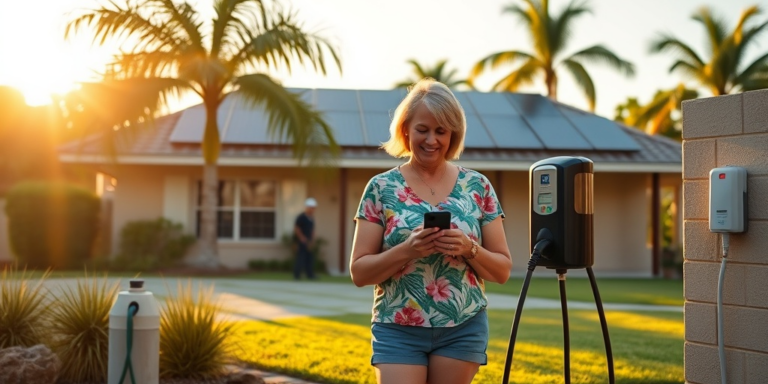
Imagine driving home after a long day, feeling the worry of rising energy costs fade away as you pull into your driveway. As you step out of your car, the tranquility of home envelops you, knowing you’ve made a sustainable choice that benefits both your wallet and the planet. This is the reality for many Gulf Coast homeowners who are turning to electric vehicles and enhancing their properties with EV charger installations. In this article titled “Why Gulf Coast Homeowners Should Consider EV Charger Installation”, we will explore essential reasons that shine a light on this modern energy solution. In 2023, approximately 4.7 million EVs were on the road, representing a 40% increase compared to the previous year (EVAdoption.com). As we look to 2025, the demand for electric vehicles is projected to increase, with some estimates suggesting 18.5 million EVs on U.S. roads by then (IEEFA.org). With this influx, the installation of EV chargers becomes a crucial step for efficient energy use and enhancing property value.
The importance of this topic grows every day as energy costs continue to rise, creating an urgent need for homeowners to find cost-saving solutions that don’t compromise convenience or sustainability. In this blog, we’ll dive into five key sections: first, we will provide an insightful case study that reveals real-world benefits; next, we will offer a comprehensive checklist for successful EV charger installation; then, we’ll debunk common myths surrounding EV chargers; following that, we will emphasize the local focus and how Florida policies align with the push for EV adoption; and finally, we will break down the technical aspects of EV chargers and their integration into solar systems. By the end of this article, you will be equipped with the knowledge necessary to make informed decisions about EV charger installation and its worth for you as a homeowner.
Transforming Your Home: The Case for EV Charger Installation
Meet Maria, a Gulf Coast homeowner who decided to embrace sustainability by purchasing her first electric vehicle. The excitement of driving her new Tesla was soon met with the challenges of finding a convenient charging solution. Maria quickly learned that charging stations were often few and far between, and she found herself planning her errands around the location of charging stations rather than the ordinary flow of her day. Frustrated by the inconvenience, she decided to invest in an EV charger installation in her garage. Even though it had an initial cost of around $1,200 to $2,500 (Energy.gov), the benefits quickly outweighed the financial commitment.
Here’s what Maria discovered:
- Cost Savings: With the advent of solar technology, installation of her EV charger allowed her to utilize the solar power generated from her roof panels, significantly reducing her charging costs to an average of just 3 cents per mile (NREL.gov).
- Convenience: Maria appreciated the seamless experience of charging her vehicle overnight, cutting down the time she used to spend searching for public charging stations.
- Increased Home Value: The installation raised her property value as more homebuyers look for contemporary features that align with sustainability trends.
But Maria’s experience enlightens us about common misconceptions surrounding EV charger installation. Here are some of the real advantages to consider:
- The charging process is often cheaper and more convenient than traditional fuel options.
- EV chargers can be installed in as little as one day and often come with warranty and installation options for peace of mind.
- In Florida, homeowners with EV chargers may be eligible for various state tax credits and incentives, making this an attractive investment (SEIA.org).
With the combination of cost savings and future market demand, you can envision how EV chargers enhance the livability of homes. Thinking ahead to 2025 and beyond, EV ownership will only continue to rise. Research shows that as prices of EVs drop and the infrastructure for charging stations expands, more homeowners will choose this eco-friendly transportation option (IEEFA.org).
Transitioning into the next phase, let’s explore the essential checklist for installing your own EV charger. What are the crucial steps every homeowner should take to ensure a successful installation?
A Step-By-Step Checklist for EV Charger Installation
If you’re considering an EV charger for your Gulf Coast home, having a clear checklist will streamline the process. Here’s a detailed roadmap every homeowner should follow:
- Step 1: Evaluate Your Electric System
Before installation, assess your current electrical system. A licensed electrician can help determine if your system can handle the additional load. Most dedicated electric vehicle chargers require a 240V outlet. - Step 2: Choose the Right Charger
Do your research on the various types of chargers—Level 1 (standard household outlet) or Level 2 (faster charging via 240V). The latter is generally recommended for efficient daily use. - Step 3: Pick the Optimal Installation Location
Install your EV charger near where you park your vehicle. Consider logistical aspects like cable length and access to your home’s electrical panel. - Step 4: Hire a Certified Electrician
Ensure a licensed electrician completes the installation to comply with local codes and safety standards. They can also assist you in acquiring any necessary permits. - Step 5: Optimize with Solar Power
To maximize savings, consider integrating your charger with a solar power system. This will allow you to utilize clean, renewable energy for charging, economically benefiting you over the long term. Plus, Florida has favorable net-metering policies to help you make the most of your solar investment (NREL.gov).
Having this checklist enables you to stay organized and focused, ensuring that you don’t miss any important steps while navigating the installation process. However, as you move forward, it’s important to address common myths associated with EV charger installations that might still be weighing on your mind.
Myth-Busting: Common Misconceptions About EV Charger Installation
As with any emerging technology, misconceptions abound. Here are five prevalent myths regarding EV chargers and the realities that counter them:
- Myth #1: Installing an EV charger is too expensive.
While initial costs can seem high, consumers often recoup their investments through savings on fuel and maintenance over time. Additionally, many states, including Florida, offer incentives that entice homeowners to switch (SEIA.org). - Myth #2: Chargers take too long to install.
Installation typically takes less than a day, often just a few hours, depending on your home’s electrical system. - Myth #3: EVs can be charged at any outlet.
While you can use a standard household outlet (Level 1) in emergencies, it’s impractical for daily use. Optimal chargers (Level 2) are designed for efficient, faster charging. - Myth #4: All EV chargers are the same.
There’s a broad range of options depending on power needs, installation location, and budget. Selecting the right fit is crucial for optimal performance. - Myth #5: Installing a charger will harm my home’s electrical system.
When installed correctly by a professional, EV chargers are safe and compliant with local codes, enhancing your home’s functionality instead of jeopardizing safety.
Now that we’ve cleared up these misconceptions, let’s shift our focus to how Florida homeowners can specifically leverage the state’s favorable policies and activities towards EV technology.
Florida’s Embrace of Electric Vehicles: Local Focus on Policy and Adoption
Florida is rapidly emerging as a hotspot for electric vehicles, providing numerous benefits for homeowners contemplating installation of EV chargers. In-state advocacy, financial incentives, and infrastructural improvements are positioning Florida at the forefront of electric vehicle adoption. The state has seen exponential growth, with EV registrations surpassing 210,000 in the last year alone (FLHSMV.gov). As electric vehicles become more accessible, understanding the local policies will help you navigate this transition smoothly.
Here are key aspects of Florida’s focus on EV infrastructure:
- Financial Incentives: Florida has several state and local rebates designed for homeowners who install EV chargers. Depending on rebates available in your city, you could save several hundred dollars.
- Charging Station Growth: In 2025, the goal is to grow the number of public charging stations dramatically, with initiatives pushing for more than 10,000 new charging points by 2030 (EVAdoption.com).
- Environmental Policies: With a growing emphasis on sustainable living, Florida aims to cut down on greenhouse gas emissions, creating a more favorable landscape for EVs and renewable technology (Department of Environmental Protection).
As Florida embraces electric vehicles, now is the time for Gulf Coast homeowners to take action. By moving forward with EV charger installation, your home not only benefits from immediate savings but also aligns with a larger movement towards a cleaner, more sustainable future.
With an understanding of local focus and policies, prospective buyers may wonder about the technology itself. This leads us to an in-depth exploration of the technical aspects of EV chargers, focusing on their integration into modern solar systems.
Diving Deep: The Technical Side of EV Chargers
As you consider the benefits of EV charger installation, it’s essential to understand the technical elements involved to ensure a smooth implementation. Here’s a detailed breakdown:
- Charger Types:
EV chargers come in various types, primarily Level 1 and Level 2. Level 1 chargers can plug into standard home outlets, but Level 2 chargers provide a faster and more efficient charging solution. For optimal use, homeowners should prioritize Level 2 installations. - Electric Panel Capacity:
Before installing an EV charger, evaluating the electric panel capacity is crucial. Most homes in Florida have the capacity for a Level 2 charger, enabling significant performance advantages. - Integration with Solar Systems:
By integrating your EV charger with solar panels, you can dramatically cut charging costs. In Florida, where sunshine is abundant, this synergy significantly enhances overall energy efficiency and reduces dependence on the grid. - Smart Charging Technology:
Many newer EV chargers come equipped with smart technology, allowing homeowners to monitor their energy consumption and choose optimal charging hours automatically (Energy.gov).
As the push for renewable energy surges globally, Florida is leading the charge with policies supporting sustainable practices. For homeowners wanting to harness solar energy’s benefits, investing in an EV charger strengthens their commitment to sustainability while optimizing financial and convenience aspects.
With the technical fundamentals in place, it’s time to focus on creating a well-defined action plan for Florida homeowners considering solar and EV charger installations.
Next Steps for Florida Solar Buyers in 2025
As we approach 2025, now is the pivotal moment for homeowners to implement effective solutions. Here’s a comprehensive action plan tailored for Florida homeowners ready to take the next step:
- Step 1: Audit Your Electric Bill
Begin by reviewing your electric bill to determine how much you currently spend on energy. This will highlight potential savings when switching to solar and utilizing an EV charger. - Step 2: Research Financing Options
Identify available financing options, including federal and state programs for solar installation and EV chargers. Grants and low-interest loans can alleviate initial costs. - Step 3: Consult a Professional
Engage with a solar specialist or licensed electrician to assess your property. Their expertise will provide insights into the best setups catered to your needs. - Step 4: Explore Incentives
Research local and state incentives tailored to EV and solar. Keeping abreast of these opportunities equips you for a productive investment. - Step 5: Make the Move
Once you’ve completed your groundwork, install your EV charger and solar panels, embracing sustainability while enjoying the rewards of reduced energy costs.
As you step into this ideal journey toward self-sufficiency and eco-friendliness, partnering with experts can help streamline your transition. To learn more about your options, feel free to visit nyelectricandsolar.com.
As we conclude this exploration into EV chargers and solar integration, it’s essential to reflect on the journey we’ve taken. Whether it’s considering real-world experiences like Maria’s or debunking myths, a commitment to electric vehicles and solar energy presents significant returns. The opportunity to reduce utility bills, enhance property values, and contribute to a sustainable future is not only achievable but also essential in today’s economic landscape.
Don’t wait for the future to catch up; seize the opportunity now. Making the informed decision to install an EV charger positively affects your lifestyle, financial health, and the environment.
Ready to start your solar journey in 2025? Connect with a certified expert at nyelectricandsolar.com today.
Related Articles
More insights about EV Charger

What Florida Homeowners Ask About Solar EV Charger Installation

Florida Homeowners Exploring EV Charger Installation Benefits

Beginner’s Guide to Understanding EV Charger Installation for Homeowners
Ready to Go Solar?
Have questions about solar energy? Our experts are here to help you make the switch to clean, renewable energy.