
Understanding EV Charger Installation for Florida Homeowners: A Technical Deep-Dive
Share:
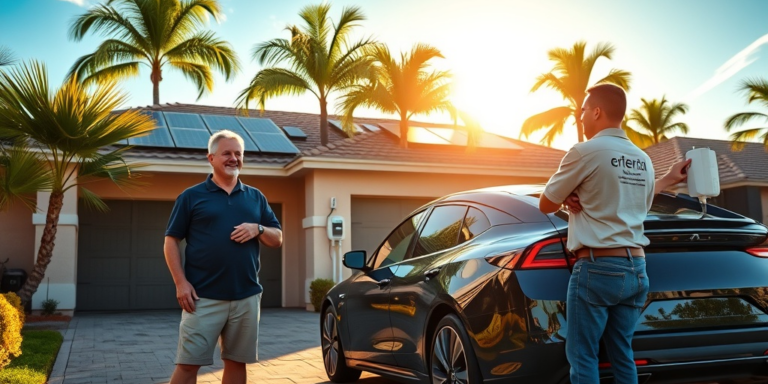
Imagine waking up one day to find your entire neighborhood buzzing with the sound of electric vehicles (EVs) effortlessly gliding down the street. You’re not just any observer; you’re a proud Florida homeowner charged with the excitement of going solar and utilizing the modern capabilities of EVs. However, the seemingly simple concept of charging your electric vehicle at home can evolve into a daunting technical challenge. This is why we delve into the topic at hand: Understanding EV Charger Installation for Florida Homeowners: A Technical Deep-Dive. Did you know that Florida ranks among the top states for EV adoptions, with over 56,000 registered electric vehicles as of 2023? And with recent state incentives promoting solar energy, homeowners are increasingly looking to power their homes and vehicles using the sun’s renewable energy (EVAdoption.com). As we step into the year 2025, the urgency to transition to sustainable energy solutions amplifies due to rising energy prices and concerns regarding grid reliability. In this blog, we will explore five valuable sections, including a deep case study revealing effective installation, essential checklists for every household, myths surrounding EV charging clarity, best local practices, and an in-depth technical analysis of charger options available for homeowners.
Electrifying Your Home: A Case Study on EV Charger Installation
Meet Lisa and Tom, a young couple residing in Orlando, Florida. Upon their decision to purchase an electric vehicle, they quickly faced the daunting task of installing an EV charger at home. After some research, they discovered various options but were skeptical about the efficiency and costs involved in installation. Overwhelmed yet determined, they reached out to a local expert to guide them through the process. This brings us to the key learning points concerning EV charger installations and how homeowners can navigate this journey effectively.
Lisa and Tom were not only curious about how to install a home charger, but they also wanted to maximize their solar savings. By installing solar panels alongside their charger, they could use renewable energy to power both their home and their electric vehicle. In 2025, a significant shift in utility rates is projected, leading to an average increase of 4% per year (EnergyStar.gov). This reinforces the necessity for efficient energy solutions in households like theirs.
- Identify Charge Requirements: Understanding the charging needs based on vehicle specifications is essential. Lisa and Tom’s Tesla, for instance, required a specific charger type for maximum speed.
- Find Qualified Installation Experts: They soon learned that not every electrician is certified for EV charger installations. Finding a qualified electrician specializing in EV systems is crucial in Florida.
- Assess Local Regulations: Local codes can be intricate. Certain cities in Florida may have specific guidelines regarding installations; understanding these regulations ensures compliance.
As they navigated these layers, they kept coming across myths. One of the most prevalent was that solar energy could not adequately support an EV charger. They learned that a well-designed solar system could not only meet their household energy needs but also provide sufficient power for their charger, reducing their dependence on the grid (CleanPower.org). The couple’s journey from curiosity to confidence in installing an EV charger illuminated the path for many homeowners grappling with similar fears.
The Essential Checklist for EV Charger Installation
Planning to install an EV charger? This detailed checklist will mitigate complications and streamline your installation process:
- Step 1: Evaluate Your Home’s Electrical Capacity
Ensure your home can support an EV charger’s power requirements. This involves checking your electrical panel’s amperage and potentially upgrading it to 200A if necessary. - Step 2: Choose the Right Charger
Select either Level 1 or Level 2 charging stations. Level 2 is typically recommended for faster charging times, making it ideal for daily use. - Step 3: Obtain Necessary Permits
Before installation, secure local building permits, as failure to do so could lead to fines or needing to remove the installed charger. - Step 4: Hire a Certified Professional
Look for electricians with EV charging installation expertise. They’ll handle compliance and safety checks. For Florida homeowners, sites like nyelectricandsolar.com can help find reputable services. - Step 5: Explore Solar Integration
Consider equipping your solar energy system to support your EV charger, which not only maximizes efficiency but also amplifies your energy savings.
Incorporating these steps helps take the guesswork out of installing an EV charging station. With platforms embracing electric mobility and the state advocating for renewable sources, Florida homeowners can capitalize on advances in solar power alongside electric vehicle technology.
Busting Myths: What You Need to Know About EV Chargers
While navigating the world of EV chargers, many misconceptions can deter homeowners from making the leap. Let’s debunk some common myths:
- Myth #1: EV Chargers are Too Expensive
It’s a common belief that installation costs are prohibitive. However, with potential state incentives and rebates, costs have significantly decreased to around $1,000-$2,000 (SEIA.org). - Myth #2: You Can’t Use Solar Power
Many think that solar panels cannot efficiently support EV chargers. In reality, a well-designed system can supply adequate power for both your home and vehicle, cutting energy bills remarkably. - Myth #3: Charging is Not Necessary if You’re in a City
City-dwellers often assume they can rely on public charging stations. However, having a home charger provides convenience and ensures your vehicle is charged overnight. - Myth #4: It’s Against HOA Regulations
Homeowners often fear HOA restrictions on installing EV chargers. Most laws across Florida favor the homeowner’s right to accommodate such installations; HOA guidelines typically need to comply with state laws. - Myth #5: Installation is Complicated and Time-Consuming
While it is crucial to have a professional installation, the process itself can be quite feasible if you know what steps to follow. Typically, installation can be completed in under a day.
By clearing up these misconceptions, homeowners like Lisa and Tom feel empowered to take charge of their energy future confidently.
Best Practices for Installing EV Chargers in Florida
As the demand for electric vehicles grows, ensuring an effective EV charging solution becomes paramount. Here are some best practices to follow:
1. Prioritize Safety Standards
Before installation, it’s vital to consult relevant safety codes to ensure your EV charger is installed correctly and avoids future hazards. Always adhere to local regulation standards.
2. Choose Optimal Location
Selecting an ideal location for your charger is key. Ensure it’s accessible for your vehicle with minimal obstacles.
3. Optimize for Solar Savings
Consider integrating your solar installation to accommodate the demands of your EV charger, significantly lowering utility costs in the long run.
4. Monitor Charging Times
Utilize smart charging options that allow you to program the best times for charging based on utility rates, promoting even further energy savings.
5. Regular Maintenance Checks
Conduct regular inspections and maintenance of your EV charger to ensure its longevity and efficiency. This proactive approach extends the hardware’s life span while safeguarding your investment.
Florida’s sunny climate not only makes it an ideal environment for solar energy but also enhances the convenience of using electric vehicles. Opting for best practices ensures technology continues to work for you optimally while amplifying your home’s energy efficiency. Appliance performance metrics suggest that homeowners can save upwards of 40% in their overall annual spending when efficiently utilizing combined solar and electric vehicle technology (CleanTechnica.com).
A Florida Homeowner’s Journey Towards Sustainable Energy
Let’s imagine Carla, a retired school teacher living in Sarasota, who decided to convert to a more sustainable lifestyle. After considering the rising costs of traditional electricity and local pumping gas, she opted for a solar-powered home and an electric vehicle. Carla’s journey mirrors many others: excitement at the prospects of savings and fear regarding installation processes.
She started by assessing her home’s potential to install solar panels, ultimately deciding on a system that would sufficiently cover both her home energy and future EV charging needs. Over time, she discovered that charging her electric vehicle during peak sunlight hours aided in completely minimizing her energy bills. Here are some key steps she undertook:
- Research Local Incentives: Carla took full advantage of state-funded incentives that significantly offset installation costs, making her transition easier.
- Engaged Certified Installers: Working with vetted local companies ensured compliance with regulations and top-notch service.
- Installed a Level 2 Charger: Seeing that her solar system could handle the load, she opted for a Level 2 charger, which offered faster charging times.
Now, with rising utility crisis rates and the expansion of electric vehicles, Carla not only feels empowered by her choices but also serves as an inspiration to her neighbors. By monitoring her energy utilization, Carla reduced her gross electric bill by over 60%, showcasing how transitioning to solar and electric vehicles is achievable.
Next Steps for Florida Solar Buyers in 2025
So, you’re excited about the transition to solar and EV charging? Here’s a concise checklist to get you started:
- Step 1: Conduct an Energy Audit
Analyze your latest energy bills to understand your consumption patterns and potential savings through solar energy. - Step 2: Explore Local Solar Providers
Reach out to reputable local providers and compare quotes to find the best match alongside reliable customer service. - Step 3: Assess Financing Options
Consider available financing plans, solar loans, and state incentives to ease financial pressures during your transition. - Step 4: Plan Your Installation Timeline
Coordinate when you wish to install solar panels and your EV charger to maximize savings and energy usage. - Step 5: Enjoy Long-Term Savings
Monitor your energy and charger use to understand savings over time and continue adapting your systems to maximize efficiency continually.
The transition to solar energy combined with integrating an EV charger empowers homeowners to own their power, allowing for significant savings, sustainability, and autonomy in energy management. As a Florida homeowner, the time is now to embrace these transitions towards a cleaner and more sustainable energy future.
In conclusion, the journey towards understanding EV charger installation shouldn’t be overwhelming. Rather, it is an opportunity packed with innovations and growing energy independence for Florida homeowners. Through shared journeys, comprehensive checklists, busted myths, and hands-on practices, you too can be part of this change. As electric vehicle adoption continues to rise alongside numerous incentives promoting solar solutions, let 2025 be the year you fully embrace renewable energy.
Ready to start your solar journey in 2025? Connect with a certified expert at nyelectricandsolar.com today.
Related Articles
More insights about EV Charger

What Florida Homeowners Ask About Solar EV Charger Installation

Florida Homeowners Exploring EV Charger Installation Benefits

Beginner’s Guide to Understanding EV Charger Installation for Homeowners
Ready to Go Solar?
Have questions about solar energy? Our experts are here to help you make the switch to clean, renewable energy.